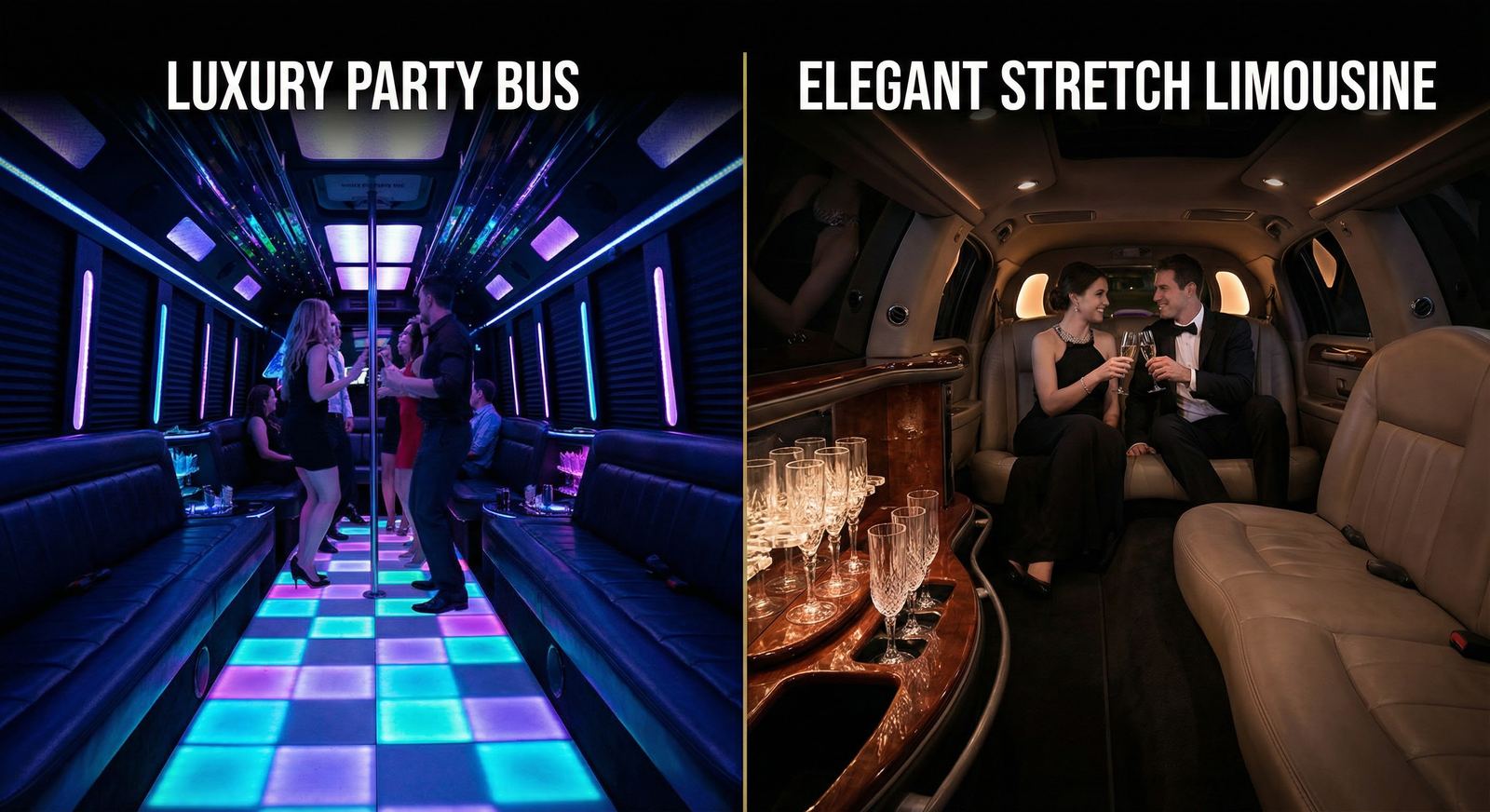
A useful party-bus budget begins with the whole transportation job, not one hourly number. Date, service window, vehicle availability, passenger and cargo fit, route, required stops, wait time, and return details can all change a written quote.
This guide does not publish an invented Denver rate card. A market range without a source, date, vehicle, fees, minimum, and route can create false confidence. Use the framework below to request comparable written totals.
The six inputs that shape a quote
- Date and service window — Include boarding time through the final drop, not only event time.
- Passenger count — Use the maximum expected count and identify minors when policies matter.
- Vehicle job — Describe seated transfer, celebration cabin, luggage trips, accessible boarding, or large-group shuttle.
- Complete route — Provide every pickup, hard arrival, stop, reboard, and final address.
- Cargo and practical capacity — Luggage, coolers, formalwear, instruments, mobility devices, and equipment use space.
- Event constraints — Venue access, mountain roads, airport timing, school rules, and late-night release can affect the plan.

Why an hourly rate is not the total
Ask whether the written price includes the full scheduled service window and how additional time is handled. Review any stated minimum, travel time, mileage, fuel, parking, toll, cleaning, damage, gratuity, tax, deposit, balance, and cancellation terms.
Do not assume every company defines billable time the same way. One quote may begin at garage departure while another begins at passenger pickup. Compare the written scope, not just the large number printed on the first line.
Calculate the hours from the itinerary
Start at group-ready time. Add boarding, travel, unloading, venue walking or check-in, planned dwell, reboarding, every later stop, and the final return. Then identify the hard time the trip cannot miss and add a sensible corridor buffer.
If the vehicle leaves during the event and returns later, ask whether that is priced as continuous service, separate transfers, or another structure. Never assume offsite time is free or that the same vehicle remains assigned.
Compare vehicle classes by the job
A smaller vehicle is not automatically cheaper if it creates two trips, cannot hold the cargo, or does not fit the required boarding. A larger vehicle is not automatically better when legal curb access is limited or the group wants a quiet seated transfer.
Ask for the assigned or proposed vehicle class, practical passenger capacity for your load, storage, accessibility, seating layout, and included amenities in writing. Photos and class names are not substitutes for assignment details.
Build an apples-to-apples quote request
Send the same facts to every provider:
- Date and passenger-ready time
- Maximum headcount and relevant ages
- Full addresses in route order
- Hard arrival, doors, ceremony, flight, or reservation times
- Wait versus scheduled-return preference
- Luggage and equipment list
- Accessibility or child-equipment needs
- Final drops and desired end time
Then compare total price, covered hours, proposed class, capacity assumptions, route, additional-time terms, cancellation terms, and exclusions.
Cost per person can hide risk
Dividing a total by the current RSVP count is helpful only after the route and vehicle fit are real. Use the maximum likely headcount for capacity, but use a conservative paid-attendee count when collecting shares. That prevents the organizer from absorbing the difference when guests cancel.
The practical next step
Create one clean itinerary and request a written option. If the wish list is longer than the available budget, remove optional stops before shrinking the required service window. The strongest value usually comes from a simpler route, accurate headcount, and a vehicle matched to the actual job—not from chasing the lowest unsupported headline rate.
Details needed for a useful Denver quote
- Provide the date, first pickup time, and final drop time.
- List every address in the order the group expects to visit it.
- Include the passenger count and any luggage or equipment.
- Ask what the written quote includes before comparing options.