This URL previously contained a step-by-step low-cost cultivation guide. That approach could become legally stale and understate electrical, fire, pesticide, property, child-access, and local-law risks. The replacement is a verification checklist, not cultivation instruction or legal advice.
Start with current official law
Colorado law and constitutional provisions address personal and medical cultivation, while state statutes also set residential-property limits and allow local regulation. Medical-patient and caregiver rules can differ from adult personal-use rules.
Check current Colorado General Assembly statutes, Colorado cannabis guidance, applicable medical-program resources, and the city or county where the property is located. Do not rely on an old plant-count paragraph from a commercial blog.
Verify the person and property
Confirm age, residency or medical-program status when relevant, property type, landlord or association rules, zoning, household limits, local registration or disclosure requirements, visibility, enclosed-and-locked-space rules, and access by minors or unauthorized people.
State permission does not automatically override a lease, homeowners association, local code, insurance condition, or federal restriction.
Treat electrical and fire risk seriously
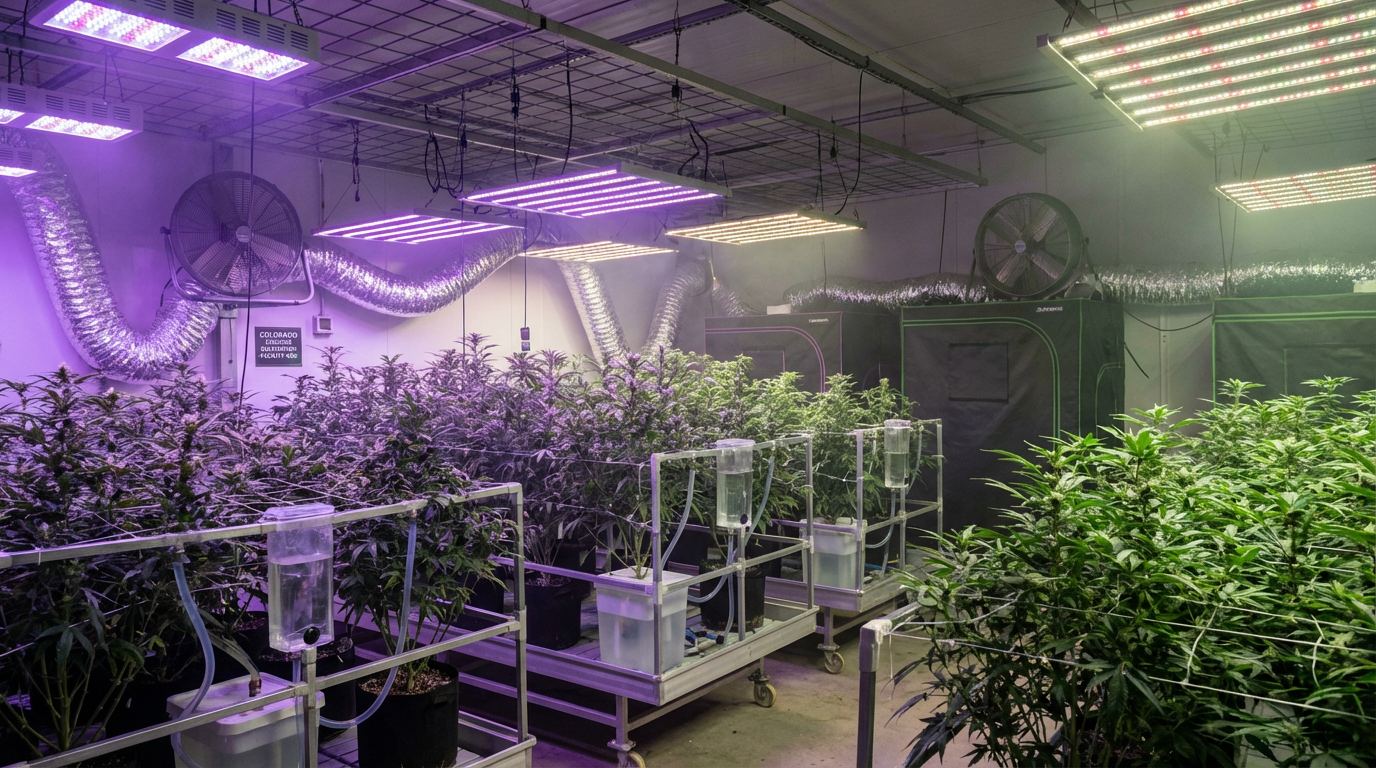
Lighting, extension cords, circuits, ventilation, heaters, humidifiers, water, and improvised modifications can create fire, shock, moisture, and structural hazards. Use qualified electrical and building professionals and follow applicable codes, product instructions, permits, and manufacturer limits.
Do not use a cheap-equipment list as a substitute for load calculations, safe installation, ventilation design, or fire protection.
Check pesticides and chemical labels
The Colorado Department of Agriculture states that pesticide use inconsistent with labeling is unlawful and maintains cannabis-specific regulatory information. A product appearing on a list is not a health or effectiveness assurance.
Use only current official guidance and label directions. Store chemicals securely and obtain qualified advice for exposure, disposal, contamination, or health questions.
Address water, mold, odor, and waste
Indoor cultivation can affect humidity, mold, drainage, odor, neighbors, wastewater, pets, children, and building materials. Confirm local nuisance, waste, wastewater, composting, and disposal requirements.
Never sell, transfer, transport, or discard cannabis or plant material based on an old blog summary. Verify the current rules that apply to the person, product, amount, and jurisdiction.
Separate cultivation from transportation services
Denver Party Ride does not provide cannabis plants, seeds, products, grow equipment, cultivation advice, delivery, consumption space, or legal services. Its transportation pages address private group routing around lawful, independently arranged destinations.
Use authoritative sources
Recheck cannabis.colorado.gov, the Colorado General Assembly, the Colorado Department of Agriculture, applicable CDPHE medical-program materials, and the local government before acting. Seek qualified legal, electrical, building, fire, pesticide, health, and property advice where appropriate.
Before growing cannabis at home
- Read current Colorado law and the rules for the exact city or county.
- Check lease, association, insurance, and property restrictions.
- Plan secure access, ventilation, moisture control, and electrical safety.
- Use official sources for plant limits, storage, pesticides, and disposal.