Transportation software should be evaluated against the operation you intend to run. Vendor pricing, features, integrations, ownership, and support change, so verify every claim directly and use a structured trial.
Denver Party Ride does not claim to have tested every platform, rank vendors independently, or maintain current vendor pricing. This article is an operator evaluation framework.
Map the quote-to-cash workflow
Document lead capture, qualification, quote versions, vehicle availability, customer approval, agreement, deposit, balance, driver assignment, trip execution, additional time, closeout, and follow-up.
The product should show who changed each important field and when. A polished booking widget is not enough when office staff cannot reconstruct the commercial record.
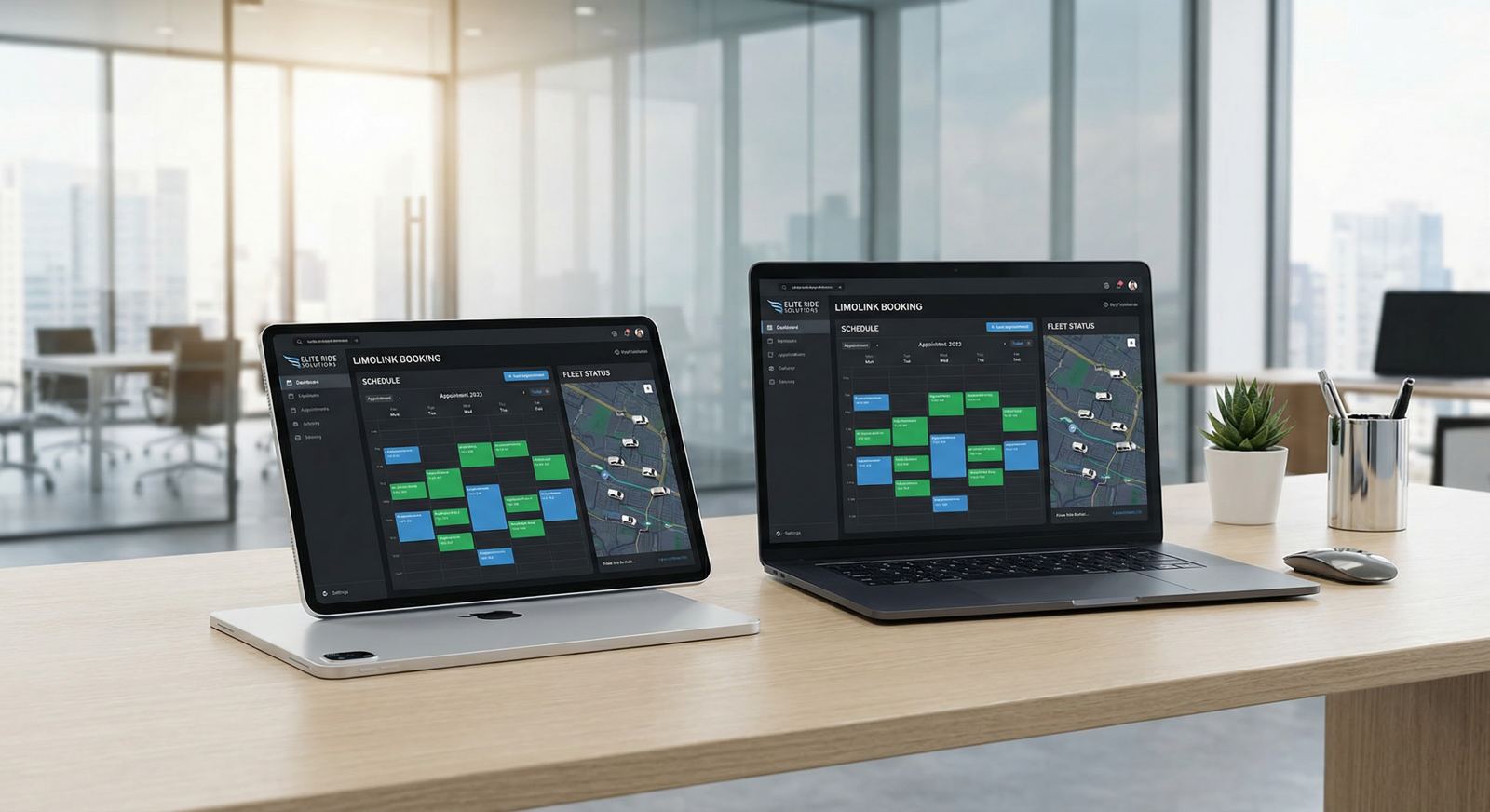
Test dispatch and day-of exceptions
Create realistic scenarios: late chauffeur, vehicle substitution, flight delay, new stop, passenger-count change, overtime, customer no-show, road closure, and split return. Test how dispatch, driver, customer, and accounting views stay aligned.
Look for role permissions, acknowledgement, timestamped notes, contact routing, escalation, and an exportable audit trail.
Evaluate capacity and fleet controls
The system should separate advertised seats, practical trip capacity, storage, accessibility, maintenance status, vehicle class, assigned unit, and substitution rules. Availability should account for service windows, travel, cleaning, inspections, and driver constraints.
Do not let software convert an inquiry into a false inventory promise.
Review payments and agreements
Confirm deposit, balance, gratuity, tax, refund, cancellation, damage, overtime, chargeback, card-storage, and reconciliation workflows. Ask which payment processor and merchant account are used and who owns the customer relationship.
Have qualified advisors review legal, tax, privacy, accessibility, and payment obligations. A software demo is not compliance advice.
Inspect integrations and data ownership
List website forms, email, SMS, phone, accounting, calendar, maps, telematics, analytics, affiliate, CRM, and reporting needs. Determine whether integrations are native, partner-built, API-based, or manual.
Ask how to export customers, trips, payments, documents, messages, vehicle data, and audit logs. Understand retention, deletion, backups, portability, API limits, webhooks, and exit costs.
Test security and permissions
Review authentication, multifactor support, least-privilege roles, driver access, payment scope, encryption representations, incident response, subprocessors, privacy terms, and account recovery. Require written answers for material controls.
Calculate total operating cost
Include subscription, setup, migration, training, payment fees, SMS, integrations, API access, support tier, hardware, extra users, affiliate fees, custom work, and exit costs. Measure labor saved and errors prevented rather than comparing only monthly price.
Run a controlled pilot
Use a small set of real trip types without risking production operations. Define pass criteria: quote time, booking accuracy, dispatch clarity, payment reconciliation, driver adoption, customer communication, exception handling, reporting, and data export.
Choose the platform that performs the documented workflow with acceptable risk and total cost—not the vendor that wins a generic popular-ten article.
Questions for a software demonstration
- Ask the vendor to show your real quote, dispatch, payment, and closeout workflow.
- Confirm user permissions, audit history, data export, and account ownership.
- Calculate setup, support, payment, messaging, and per-user costs together.
- Run a limited test before moving an active operation to a new platform.