Call or Text Now: 303-536-7879
Colorado Cannabis45 min read2026-01-05By Denver Party Ride Team

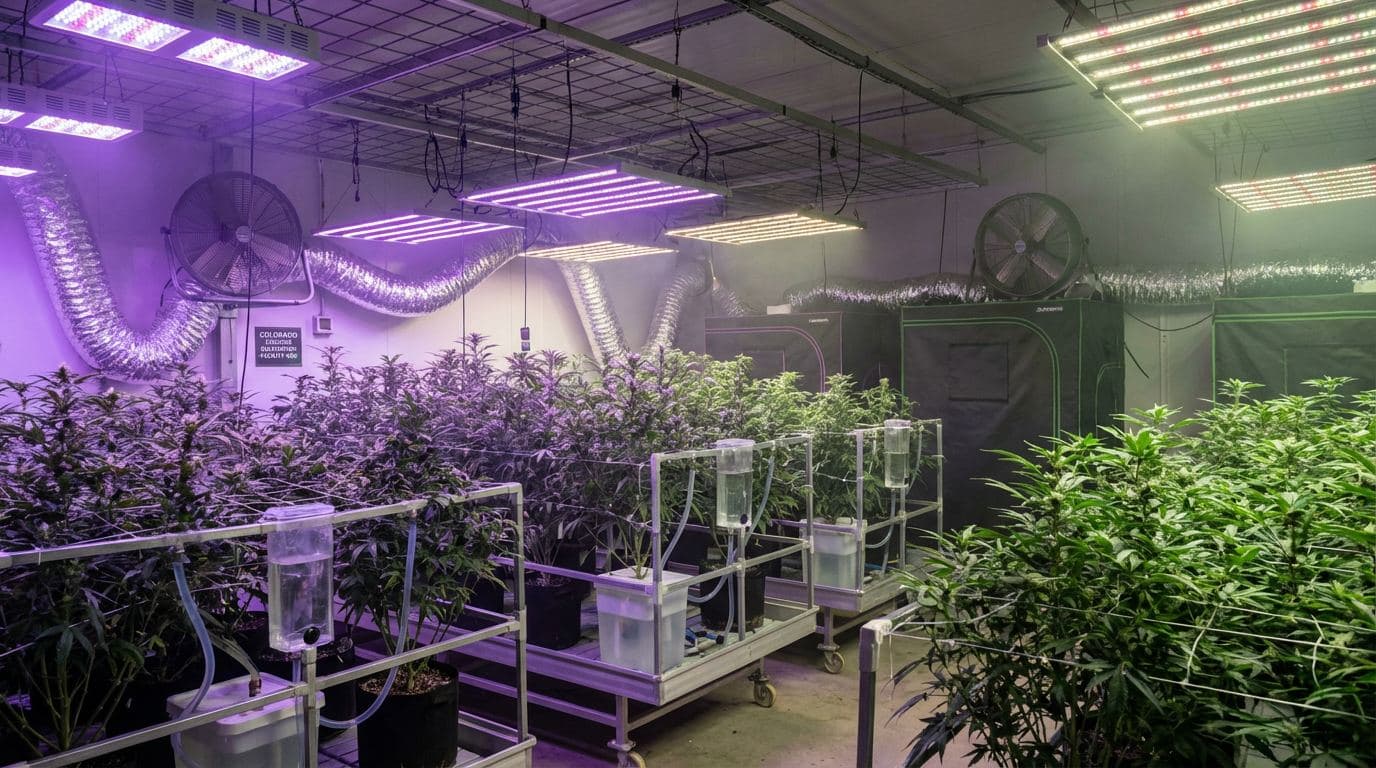
Colorado Indoor Marijuana Grow Guide: The Cheap and Easy Way

Colorado made history as the first state to legalize recreational cannabis. Whether you're a first-time grower or looking to improve your setup, this comprehensive guide covers everything you need to know about growing marijuana indoors in Colorado — the cheap and easy way.

Colorado Indoor Marijuana Grow Guide: The Cheap and Easy Way

Need a party bus for your Denver event?

Free quotes in minutes — call or text 24/7

303-536-7879

Colorado made history in 2012 when it became the first state in the nation to legalize recreational marijuana. Since then, the cannabis culture in the Centennial State has flourished beyond anything anyone could have imagined. Dispensaries line the streets of Denver, Boulder, and towns across the Front Range. Cannabis tourism has become a multi-billion dollar industry. And perhaps most importantly for everyday Coloradans — you can legally grow your own marijuana at home.

Growing your own cannabis is one of the most rewarding hobbies you can pick up. There's something deeply satisfying about nurturing a plant from a tiny seedling or clone into a towering, resinous bush dripping with frosty buds. And when you finally harvest, dry, cure, and smoke your own homegrown flower, the experience is unlike anything you can buy at a dispensary. You grew that. You know exactly what went into it. No pesticides you didn't approve of, no mystery nutrients, no corporate grow operation cutting corners. Just your plants, your care, and your harvest.

This guide is designed to be your comprehensive, no-nonsense companion for growing marijuana indoors in Colorado. We're going to cover everything from setting up your grow space to harvesting, drying, and curing your finished buds. This guide is specifically focused on indoor, soil-based growing — the cheapest, easiest, and most forgiving method for beginners. We're not going to overwhelm you with hydroponic systems, coco coir, or advanced techniques that require a degree in chemistry. If you can keep a houseplant alive, you can grow marijuana. It truly is a weed, and it wants to grow.

Whether you're a complete beginner who has never grown anything in your life or someone who has a few grows under your belt and wants to improve your results, this guide has something for you. By the end of these eight chapters, you'll have the knowledge and confidence to set up a grow room, choose your plants, nurture them through the vegetative and flowering stages, harvest at the perfect time, and cure your buds to perfection.

Let's get growing.

Chapter 1: Introduction — Why Grow Your Own in Colorado?

It's Legal, and That Changes Everything

Colorado Amendment 64, passed in November 2012, allows adults 21 and older to grow up to six marijuana plants per person, with a maximum of three in the flowering stage at any given time. If you live with another adult, your household can have up to twelve plants total. This is one of the most generous home-grow allowances in the country, and it means you can maintain a continuous growing cycle — starting new plants in the vegetative stage while your flowering plants are finishing up.

The key legal requirements are straightforward. Your grow area must be in an enclosed, locked space that is not open or public. A locked room, a closet with a lock, or a grow tent in a locked room all qualify. The plants must not be visible from outside your property without the use of binoculars or other optical aids. You cannot sell your marijuana without a license, but you can gift up to one ounce to another adult. And of course, you must be 21 or older. Some municipalities have additional restrictions, so check your local ordinances, but for most Coloradans, growing at home is completely legal and straightforward.

Why Indoor Growing?

Colorado's climate presents unique challenges for outdoor cannabis cultivation. While the state gets over 300 days of sunshine per year, the altitude, dry air, temperature swings, and short growing season make outdoor growing unpredictable. Late spring frosts can kill young plants. Early fall freezes can destroy a harvest that's weeks away from being ready. Hailstorms can shred your plants in minutes. And the intense UV radiation at altitude, while great for trichome production, can stress plants that aren't adapted to it.

Indoor growing eliminates all of these variables. You control the temperature, humidity, light cycle, and every other environmental factor. Your plants are protected from pests, weather, and nosy neighbors. And you can grow year-round — not just during the brief Colorado outdoor season. The tradeoff is that you need to invest in some equipment and pay for electricity, but for most home growers, the control and consistency of indoor growing more than makes up for the cost.

This Guide Is for You

This guide is written for the everyday Coloradan who wants to grow some great weed at home without spending a fortune or getting a Ph.D. in botany. We focus on the cheapest and easiest methods that still produce excellent results. We're talking about soil growing — not hydroponics, not aeroponics, not aquaponics. Soil is forgiving, affordable, and intuitive. If you mess up the pH a little, soil buffers it. If you overfeed slightly, soil absorbs the excess. It's the training wheels of growing, and even experienced growers often prefer it for its simplicity and the flavor it produces.

Even as a complete beginner, you can realistically expect to yield one to two ounces per plant on your first grow. With some experience and better technique, three to four ounces per plant is very achievable indoors. At dispensary prices of $150-$300 per ounce for quality flower, a single successful grow can save you hundreds or even thousands of dollars. And the quality of well-grown homegrown cannabis often surpasses what you'll find at most dispensaries.

Growing marijuana isn't rocket science. It's a plant. It wants to grow. Your job is simply to give it what it needs — light, water, nutrients, and the right environment — and stay out of its way. Let's start with the basics.

Chapter 2: The Beginning Basics — Setting Up Your Grow

Finding a Grow Space

The first decision you need to make is where you're going to grow. Colorado law requires that your grow area be in an enclosed, locked space. This can be a spare bedroom, a large closet, a basement corner, or a garage. However, the most popular option for home growers is a grow tent.

Grow Tents are purpose-built enclosures made of heavy-duty fabric with a reflective interior (usually Mylar). They come in various sizes, have built-in ports for ventilation ducting, and are designed to be lightproof. A good 4x4-foot grow tent costs $80-$150 and is the ideal setup for a home grow. It contains the light, the smell (with proper filtration), and the mess. When your grow is done, you can collapse it and store it. For most home growers, a grow tent is the single best investment you can make.

Closets and Spare Rooms work too, but you'll need to make some modifications. You'll want to line the walls with reflective material (Mylar sheets or even flat white paint, which reflects about 85% of light). You'll need to ensure the space is lightproof during the dark cycle. And you'll need to cut holes or use existing openings for ventilation ducting.

Minimum Space Requirements: You need at least 3x3 feet of floor space for three plants. A 4x4-foot space is more comfortable and gives your plants room to spread out. Height is critical — cannabis plants can grow 4 to 6 feet tall indoors, and you need additional height above the canopy for your lights (at least 12-24 inches between the light and the tops of the plants, depending on the type of light). A grow space with 7-8 feet of vertical clearance is ideal. If your space is shorter, you'll need to use training techniques to keep your plants compact, which we'll cover in Chapter 4.

Flooring should be something that can handle water and dirt. Tile, concrete, or a plastic tray/liner over carpet all work. You will spill water. It will happen. Plan for it. A wet/dry shop vac is a handy tool to have nearby.

Timing Your Grow

A complete indoor grow cycle takes approximately 2.5 to 5 months, depending on the strain and how long you vegetate your plants. Here's a rough timeline:

- Seedling/Clone Stage: 1-2 weeks - Vegetative Stage: 4-8 weeks (you control this) - Flowering Stage: 8-10 weeks (strain-dependent) - Drying: 7-14 days - Curing: 2-8 weeks (longer is better)

So from planting a seed or rooting a clone to smoking your first bowl, you're looking at roughly 3-5 months. Plan accordingly. If you want weed by 4/20, start your grow in December or January.

Pots and Containers

Your plants need somewhere to live, and the size of the container directly affects the size of the plant. For indoor growing, 5-gallon containers are the sweet spot. They're large enough to support a full-sized plant through flowering but small enough to move around your grow space when needed.

Fabric grow bags (also called smart pots) are the most popular choice among home growers. They promote air pruning of the roots, which prevents root binding and encourages a healthier, more branched root system. They're also cheap — a 5-pack of 5-gallon fabric pots costs about $10-$15.

Plastic pots work fine too. Just make sure they have adequate drainage holes in the bottom. You never want your plant sitting in standing water.

5-gallon buckets from the hardware store are another budget option. Drill 6-8 holes in the bottom for drainage, and you're good to go.

Whatever container you choose, make sure you have saucers or trays underneath to catch runoff water. You'll be watering until about 10-20% of the water runs out the bottom (this helps prevent salt buildup in the soil), and you need somewhere for that runoff to go.

The Grow Medium: Soil

For beginners, soil is the way to go. Hydroponics can produce faster growth and bigger yields, but it requires more equipment, more monitoring, and more expertise. Soil is forgiving, intuitive, and produces excellent flavor in the finished buds.

Quality soil is the foundation of a successful grow. Don't use dirt from your backyard. Don't use cheap potting soil from the dollar store. Invest in a quality cannabis-friendly soil, and your plants will reward you.

Fox Farm Happy Frog is the gold standard for cannabis soil. It's available at most garden centers and grow shops in Colorado, and it's specifically formulated with the nutrients and pH that cannabis loves. Happy Frog contains mycorrhizal fungi, humic acid, and beneficial soil microbes that help your plants absorb nutrients more efficiently. It's pH-adjusted to the range cannabis prefers (6.3-6.8), and it contains enough nutrients to feed your plants for the first 3-4 weeks without any additional fertilizer.

Fox Farm Ocean Forest is another excellent option, but it's "hotter" (contains more nutrients) than Happy Frog. Some seedlings and young clones can get nutrient burn in Ocean Forest. A popular approach is to use Happy Frog for the first few weeks and then transplant into Ocean Forest for the vegetative and flowering stages, or mix the two together.

Other good soil options include Roots Organics, Build-a-Soil (a Colorado company based in Montrose), and any quality organic potting soil that has good drainage and isn't loaded with slow-release synthetic fertilizers (avoid Miracle-Gro and similar brands — the slow-release nutrients can cause problems during flowering).

Adding perlite (about 20-30% by volume) to your soil improves drainage and aeration. Cannabis roots need oxygen, and overly dense, waterlogged soil is one of the most common beginner mistakes. Perlite is cheap and available everywhere.

Temperature

Cannabis thrives in temperatures between 65°F and 80°F during the lights-on period, with a slight drop (5-10°F) during the dark period. Colorado's indoor climate can make temperature management tricky depending on the season.

Winter: Colorado winters are cold and dry. If your grow space is in a garage or basement, you may need a small space heater to maintain adequate temperatures, especially during the dark period when the grow lights are off and not generating heat. A simple ceramic space heater with a thermostat works well. Set it to maintain a minimum of 60°F.

Summer: Colorado summers can push indoor temperatures well above the comfort zone, especially when you have powerful grow lights pumping out heat. This is where ventilation becomes critical (more on that below). One popular trick is to run your lights during the nighttime hours and keep them off during the day. This way, your lights are generating heat during the coolest part of the day and are off during the hottest part. For example, lights on from 8 PM to 8 AM (or 8 PM to 2 PM for an 18-hour veg cycle).

Monitoring: Get a digital thermometer/hygrometer combo (about $10-$15 on Amazon). Place it at canopy level — that's where the temperature matters most. Many models record the highs and lows over a 24-hour period, which is incredibly useful for identifying temperature swings.

Lights

Lighting is the most important investment in your indoor grow. The sun is free, but since you're growing indoors, you need to replicate it. There are several types of grow lights, each with pros and cons.

HPS (High-Pressure Sodium) — 1000W: HPS lights have been the industry standard for decades, and for good reason. A 1000W HPS light produces intense, powerful light that drives explosive flower growth. The light spectrum is heavy in the red/orange range, which is ideal for flowering. A complete 1000W HPS setup (bulb, ballast, and reflector) costs $150-$250 — significantly cheaper than comparable LED setups. The downside is heat. A 1000W HPS light generates significant heat, which means you need robust ventilation. But in Colorado's dry, often cool climate, this heat can actually be an advantage, especially in winter. For the budget-conscious grower, HPS is hard to beat on a cost-per-gram basis.

LED (Light Emitting Diode): LED grow lights have improved dramatically in recent years and are now the most popular choice for new growers. They produce less heat than HPS, use less electricity, and modern full-spectrum LEDs provide excellent light for both vegetative growth and flowering. Quality LED panels cost more upfront ($200-$600 for a good one that covers a 4x4 space), but the energy savings and reduced heat make them a worthwhile investment, especially if you plan to grow for years. Brands like HLG, Spider Farmer, and Mars Hydro are popular in the home-grow community.

Metal Halide (MH): Metal Halide bulbs produce light that's heavy in the blue spectrum, which promotes compact, bushy vegetative growth. Many growers use a Metal Halide bulb during the vegetative stage and then switch to an HPS bulb for flowering. If you buy a 1000W digital ballast, it can run both MH and HPS bulbs, giving you the best of both worlds.

Light Distance: Keep your lights as close to the canopy as possible without burning the plants. For HPS 1000W, this is typically 18-24 inches above the canopy. For LED panels, 12-24 inches depending on the manufacturer's recommendations. The closer the light, the more intense the coverage and the denser the buds. Hold the back of your hand at canopy level — if it's too hot for your hand after 30 seconds, the light is too close.

Light Schedules: During the vegetative stage, plants need 18-24 hours of light per day. During the flowering stage, plants need exactly 12 hours of light and 12 hours of uninterrupted darkness. The light schedule is what controls when your plants start flowering — more on this in Chapter 4.

Ready to book your Denver party bus?

Get a free quote in 60 seconds — no obligation, no hassle.

Get Free Quote

Water

Good news — tap water works fine for most cannabis grows in Colorado. Denver Water and most Front Range municipal water supplies have acceptable quality for cannabis cultivation. However, you should let your tap water sit out in an open container for 24 hours before using it. This allows chlorine to evaporate and the water to reach room temperature. Plants don't like cold water shocks.

pH is critical. Cannabis grown in soil prefers a pH between 6.0 and 6.5. Outside this range, the plant cannot efficiently absorb nutrients, even if they're present in the soil. This condition is called nutrient lockout, and it mimics the symptoms of nutrient deficiency. A pH testing kit (liquid drops or digital meter) costs $10-$30 and is an absolute must-have. pH Up and pH Down solutions (about $10 each) allow you to adjust your water's pH before feeding.

A dissolved solvent meter (TDS/PPM meter) is another useful tool, costing about $10-$15. It measures the total dissolved solids in your water, which tells you how much nutrient content your water already has and helps you dial in your feeding schedule.

Ventilation

Proper airflow is essential for healthy cannabis plants and for managing the heat your grow lights produce. You need two types of air movement in your grow space.

Oscillating fans provide air movement at the canopy level. This strengthens stems (the gentle stress of wind causes stems to grow thicker and stronger), prevents hot spots under the lights, and reduces the risk of mold and mildew by keeping air circulating around the buds. A simple clip-on or standing oscillating fan pointed at the canopy is sufficient. You want the leaves to gently rustle, not bend over from the wind.

Inline exhaust fans remove hot, humid, stale air from your grow space and pull in fresh, CO2-rich air. Hot air rises, so your exhaust fan should be mounted at the top of your grow space (most grow tents have ports for this at the top). A 4-inch or 6-inch inline fan is sufficient for most home grows. The fan connects to ducting that routes the exhaust air out of the grow space — ideally to another room or out a window.

Carbon filters (also called charcoal filters or scrubbers) attach to your inline fan and neutralize the smell of flowering cannabis before the air is exhausted. During weeks 3-8 of flowering, cannabis plants produce an incredibly pungent smell that will permeate your entire house (and potentially your neighbors' awareness) without filtration. A quality carbon filter costs $50-$100 and lasts for 1-2 years. This is not optional if you care about discretion.

Watering Your Plants

Watering is one of the most common areas where beginners make mistakes. The golden rule is simple: water when the top 1-2 inches of soil are dry. Stick your finger into the soil. If the top two inches are dry, it's time to water. If it's still moist, wait another day.

How much to water: Water thoroughly until you see about 10-20% runoff coming out the bottom of the pot. This ensures the entire root zone is saturated and helps flush out any excess salt buildup from nutrients.

How often: This varies depending on the size of the plant, the size of the pot, the temperature, and the humidity. Seedlings and small plants in large pots might only need watering every 4-5 days. Large flowering plants in 5-gallon pots might need water every 1-2 days. Let the plant tell you — check the soil, and lift the pot. A dry pot is noticeably lighter than a wet one.

Overwatering vs. Underwatering: Overwatering is far more common and far more damaging than underwatering. An overwatered plant has droopy, heavy-looking leaves. The leaves point down and look lifeless. The soil stays wet for days. Root rot can set in. An underwatered plant wilts and the leaves curl inward, but it recovers quickly once watered. If you're unsure, err on the side of underwatering. Cannabis is more drought-tolerant than most people think.

During flowering, plants drink significantly more water. You'll likely need to increase watering frequency as buds develop and the plant's metabolism ramps up.

Nutrients

Cannabis plants need three primary macronutrients: Nitrogen (N), Phosphorus (P), and Potassium (K). During the vegetative stage, plants want more nitrogen for leaf and stem growth. During the flowering stage, plants want more phosphorus and potassium for bud development.

Vegging nutrients have a higher N ratio (like 6-4-4 or 3-1-2). Flowering nutrients have a higher P and K ratio (like 2-8-4 or 0-5-4). Most nutrient lines sell both a "Grow" and a "Bloom" formula.

Fox Farm Trio (Grow Big, Big Bloom, and Tiger Bloom) is the most popular nutrient line for soil cannabis growing. It's affordable, effective, and available at every grow shop in Colorado. Follow the feeding schedule on the Fox Farm website, but start at half the recommended dose. Cannabis nutrient burn is extremely common among beginners who feed too aggressively. It's much easier to add more nutrients than to fix nutrient burn. You can always increase the dose if the plant looks hungry.

Feed, Water, Water: A popular schedule is to alternate between feeding (water with nutrients) and plain watering. This gives the plant nutrients on one watering and then flushes excess salts on the next one or two waterings. Feed once, then water with plain pH-adjusted water one or two times, then feed again. This simple rhythm prevents salt buildup and nutrient toxicity.

Chapter 3: Picking Plants, Seeds, and Clones

Seeds vs. Clones

You have two main options for starting your cannabis garden: seeds or clones. Both have advantages and disadvantages.

Seeds are the product of sexual reproduction between a male and female cannabis plant. They contain unique genetics — even seeds from the same parents will produce slightly different plants (just like human siblings look different). Seeds need to be germinated before planting, which takes 2-5 days. They then go through a seedling stage of 1-2 weeks before they're established enough to start vigorous vegetative growth. Seeds are available from seed banks online and at some Colorado grow shops.

Clones are cuttings taken from a "mother" plant. They're genetically identical to the mother, which means you know exactly what you're getting — the same growth pattern, the same potency, the same flowering time. Clones are already established plants (usually 4-8 inches tall with roots), so they skip the germination and seedling stages entirely. This saves 2-3 weeks compared to starting from seed. For beginners, clones are generally the easier and faster option.

Male vs. Female Plants

Only female cannabis plants produce the resinous buds that you want to smoke. Male plants produce pollen sacs instead of buds, and if a male pollinates a female, the female will spend her energy producing seeds instead of THC-rich buds. This is why it's critical to identify and remove any male plants from your grow space as early as possible.

If you buy feminized seeds, the risk of males is nearly eliminated (99%+ female). Most reputable seed banks sell feminized seeds, and they're worth the slight premium for the peace of mind.

If you buy clones, they're taken from a known female mother plant, so they're guaranteed to be female (assuming the seller is honest and competent). This is another advantage of starting with clones.

Regular (non-feminized) seeds have roughly a 50/50 chance of being male or female. You won't be able to tell until the plant begins showing pre-flowers, usually during the late vegetative stage or early flowering. Male pre-flowers look like small round balls on a stick, while female pre-flowers have white hair-like pistils. If you're growing regular seeds, keep a close eye on your plants and remove males immediately.

Auto-Flowering Seeds

Auto-flowering cannabis strains have been bred to flower automatically based on age rather than light cycle. Regular (photoperiod) cannabis requires a change to 12/12 light to trigger flowering, but auto-flowers will begin flowering on their own after 3-4 weeks of growth, regardless of the light schedule. They typically complete their entire life cycle in 8-12 weeks from seed.

Auto-flowers are great for beginners because they're simple — you just plant them, give them 18-20 hours of light throughout the entire grow, and they do their thing. The downside is that auto-flowers typically produce smaller yields than photoperiod plants, and you can't use techniques like topping or heavy training because there's no time for the plant to recover. For your first grow, auto-flowers can be a great confidence-builder, but most serious home growers eventually move to photoperiod strains for the greater control and larger harvests.

Recommended Strains for Colorado Indoor Growing

Not all strains are created equal, and some are better suited to indoor growing than others. Here are five strains that are beginner-friendly, widely available in Colorado, and produce excellent results indoors.

Blue Dream — A sativa-dominant hybrid that's been one of the most popular strains in Colorado for over a decade. It's forgiving of beginner mistakes, produces generous yields, and has a sweet berry flavor. It stretches quite a bit during flowering, so be prepared to manage height. Flowering time is about 9-10 weeks.

Girl Scout Cookies (GSC) — An indica-dominant hybrid known for its potency and complex flavor profile (sweet, earthy, minty). GSC plants tend to stay compact, making them ideal for smaller grow spaces. Yields are moderate, but the quality is exceptional. Flowering time is about 8-9 weeks.

Northern Lights — A classic indica that's been a staple of indoor growing for decades. Northern Lights is compact, fast-flowering (7-8 weeks), and extremely resilient. It's one of the most forgiving strains for beginners and produces dense, resinous buds with a classic earthy, piney flavor. If this is your first grow, Northern Lights is arguably the best choice.

White Widow — A balanced hybrid that's been popular worldwide since the 1990s. White Widow is vigorous, resilient, and produces buds coated in a thick layer of white trichomes (hence the name). It's a great yielder and tolerates a wide range of growing conditions. Flowering time is about 8-9 weeks.

OG Kush — A legendary strain that forms the genetic backbone of countless popular hybrids. OG Kush produces potent, flavorful buds with a distinctive earthy, piney, lemon aroma. It can be slightly more demanding than the other strains on this list (it prefers consistent conditions), but the results are worth it. Flowering time is about 8-9 weeks.

Where to Get Clones in Denver

Denver has a thriving market for cannabis clones. Here are some places to look:

Dispensaries: Some recreational and medical dispensaries sell clones. Availability varies, and selection may be limited, but it's a convenient option. Call ahead to check availability.

Grow shops: Many of the hydroponic and garden supply stores along the Front Range sell or can connect you with clone providers. They're also excellent resources for advice and supplies.

Cannabis events and farmers markets: Colorado hosts various cannabis-related events where clone vendors sell cuttings. These can be great places to find unique genetics.

Online clone delivery services: Several Colorado-based companies deliver clones directly to your door. Prices typically range from $15-$30 per clone.

Caring for New Clones and Seedlings

Whether you start from seed or clone, your young plants need gentle care during their first 1-2 weeks.

Light: Keep the light relatively far from young plants (24-30 inches for HPS, 18-24 inches for LED) or use a lower-intensity light during the first week. Young plants are more sensitive to light stress. Gradually move the light closer as the plant establishes itself.

Water: Keep the soil moist but not waterlogged. Young plants have small root systems and can't handle a full soaking like established plants. Water lightly and frequently.

Humidity: Seedlings and fresh clones prefer higher humidity (60-70%). A humidity dome (available for a few dollars at any garden center) placed over clones helps them establish roots. Remove the dome gradually over 5-7 days as the clone establishes itself.

8 Passenger Limousine exterior
8 Passenger Limousine interior

Nutrients: Do not feed nutrients for the first 2-3 weeks if you're using quality soil like Fox Farm Happy Frog. The soil has enough nutrients to sustain young plants. Adding more nutrients at this stage is a common beginner mistake that leads to nutrient burn.

Chapter 4: The Actual Growing Process

The Vegetative Stage

Once your plants are established (about 2 weeks old from clone or 3-4 weeks from seed), they enter the vegetative stage. This is the growth phase where the plant focuses on building its structure — stems, branches, leaves, and roots. The bigger and healthier your plant gets during veg, the more bud sites it will have during flowering, and the bigger your harvest will be.

Light cycle: During veg, provide 18-24 hours of light per day. Most growers use 18 hours on / 6 hours off, which gives the plant a rest period while still driving rapid growth. Some growers run 24 hours of continuous light during veg, arguing that more light equals more growth. Both approaches work. Use a Metal Halide bulb during veg if you have one — the blue-spectrum light promotes compact, bushy growth with tight internodal spacing. If you're using LED, run it throughout the entire grow.

Growth rate: During veg, healthy cannabis plants grow rapidly — sometimes an inch or more per day. They'll develop new sets of leaves every few days, and the stems will thicken and branch out. This is when your grow space starts to feel full.

Duration: You control how long the vegetative stage lasts by choosing when to switch the light cycle to 12/12 (which triggers flowering). Most indoor growers veg for 4-8 weeks. Remember this critical rule: cannabis plants typically double in size after you switch to flowering. So if your grow space is 7 feet tall and your light hangs at 6 feet, you want to switch to flowering when your plants are about 2-2.5 feet tall, because they'll stretch to 4-5 feet during the flowering stretch. Switching too late and having your plants grow into the lights is a very common beginner mistake.

Topping and Training

Left to its own devices, a cannabis plant grows in a "Christmas tree" shape — one main cola (top bud) that dominates, with smaller side branches below. This is fine outdoors where the sun moves across the sky, but indoors where the light comes from directly above, this shape is inefficient. The main cola gets all the light while the lower branches produce small, airy "popcorn" buds.

Topping is the technique of cutting off the main growing tip (the top of the plant) to break its apical dominance. When you cut the top, the plant responds by growing two new main shoots from the node below the cut. You now have two main colas instead of one. Top again, and you have four. This creates a flatter, bushier canopy where multiple bud sites receive equal light, resulting in a more even and larger harvest overall.

How to top: Wait until the plant has at least 5-6 nodes (sets of leaves). Using clean, sharp scissors, cut the main stem just above the 4th or 5th node. The plant will redirect its energy to the two side branches at that node, which will become your new main shoots. The plant needs 3-5 days to recover before resuming vigorous growth.

Low-Stress Training (LST) involves gently bending and tying down branches to create a flat, even canopy. The goal is to expose more bud sites to direct light. Use soft plant ties, pipe cleaners, or garden wire to gently pull branches down and secure them to the edge of the pot or a trellis. LST doesn't stress the plant as much as topping, so it can be done continuously throughout veg and into early flowering.

SCROG (Screen of Green) is a popular training method where you place a horizontal screen or net about 12-18 inches above the pot. As branches grow up through the screen, you tuck them back under and weave them horizontally. This creates an extremely flat, even canopy where every bud site is at the same height and receives equal light. SCROG is one of the most effective techniques for maximizing indoor yields.

When to Switch to Flowering

The decision of when to flip from veg to flower is one of the most important timing calls in the entire grow. Here's how to think about it:

1. Consider the stretch. Your plants will roughly double in height during the first 2-3 weeks of flowering (called "the stretch"). So flip when your plants are at half their maximum desired height.

2. Consider your space. If your light is at 6 feet and you need 18 inches of clearance between the light and the canopy, your maximum plant height is about 4.5 feet. Flip at about 2-2.5 feet.

3. Consider the strain. Sativa-dominant strains stretch more (sometimes tripling in height) while indica-dominant strains stretch less. Know your strain and plan accordingly.

4. Consider your training. If you've topped and trained well, your plant will be wider and shorter than an untrained plant, allowing you to veg longer and build more bud sites.

The Flowering Stage

Flowering is where the magic happens. This is when your plants stop focusing on vegetative growth and redirect all their energy into producing buds. The flowering stage is triggered by changing the light cycle to 12 hours of light and 12 hours of absolute, uninterrupted darkness.

The importance of darkness cannot be overstated. During the 12 hours of darkness, even tiny light leaks — a crack in the tent zipper, a power strip LED, light creeping under a door — can prevent your plants from flowering properly or even cause them to revert to vegetative growth or turn hermaphrodite (developing both male and female flowers). Seal every light leak. Cover every LED indicator. If you can see your hand in front of your face during the dark period, there's too much light.

Switch to HPS bulbs (if using HID lighting) when you flip to flower. The red/orange spectrum of HPS drives bud production. If you're using full-spectrum LED, you don't need to change anything.

Switch to flowering nutrients (higher P and K, lower N) when you flip the light cycle. Most nutrient lines have a specific "Bloom" formula. Again, start at half the recommended dose and increase if the plant looks hungry.

Week-by-week flowering progression:

Weeks 1-2 (The Stretch): The plant stretches dramatically, sometimes doubling in height. White pistils (hairs) begin appearing at the nodes, confirming the plant is female and beginning to flower. Continue training during the stretch if needed.

Weeks 3-4: Bud sites become clearly defined. Small buds begin forming at each node. The smell starts to increase noticeably. Make sure your carbon filter is working.

Weeks 5-6: Buds swell rapidly. Trichomes (the tiny crystal-like resin glands) begin covering the buds and sugar leaves. The smell is intense. The plant is drinking more water than ever.

Weeks 7-8: Buds are dense and heavy. Many of the white pistils are darkening to orange or red. Trichomes are developing from clear to milky/cloudy. This is the home stretch.

Weeks 8-10: Depending on the strain, harvest time approaches. Continue monitoring trichomes (more on this in Chapter 6). Some strains finish in 8 weeks; others need 10 or more. The plant will tell you when it's ready.

Chapter 5: Keeping Plants In Check

Pruning and Lollipopping

Not all parts of your plant will produce quality buds. The lower branches that are shaded by the canopy above don't receive enough light to produce dense, resinous flowers. Instead, they produce small, airy, larfy buds that aren't worth the plant's energy. Removing this lower growth — called lollipopping — redirects the plant's energy to the top canopy where the main buds are developing.

How to lollipop: About 1-2 weeks into flowering (during the stretch), remove all growth from the bottom third of the plant. Strip off small branches, side shoots, and fan leaves from the lower portion, leaving the plant looking like a lollipop — bare stem on the bottom, canopy on top. This improves airflow at the base of the plant (reducing mold risk) and concentrates bud development where the light is strongest.

Defoliation

Defoliation is the removal of fan leaves (the large, iconic marijuana leaves) that are blocking light from reaching bud sites. This is a somewhat controversial technique — some growers swear by it, while others believe the plant needs all its leaves for photosynthesis. The truth is somewhere in the middle.

Strategic defoliation — removing only the fan leaves that are directly blocking light from reaching bud sites — is generally beneficial. Do this gradually, removing a few leaves at a time rather than stripping the plant bare. The best times to defoliate are at the beginning of flowering and again around week 3 of flowering.

Don't over-defoliate. The plant needs leaves to photosynthesize and produce energy. Removing too many leaves at once can stress the plant and slow bud development. Take off the leaves that are clearly shading bud sites, and leave the rest.

Pest Prevention

Indoor growing dramatically reduces your pest risk compared to outdoor growing, but pests can still find their way in. Prevention is always easier than treatment.

Keep your grow room clean. Sweep or vacuum regularly. Remove dead leaves and debris. Don't bring outdoor plants or clothing that's been in a garden into your grow space.

Neem oil is a natural, organic pesticide that's effective against a wide range of cannabis pests. Mix it according to the label directions and spray your plants every 1-2 weeks during the vegetative stage as a preventive measure. Do not spray neem oil on buds during flowering — it can affect taste and is not something you want to smoke.

Sticky traps (yellow sticky cards) placed around the grow space catch flying pests like fungus gnats and whiteflies. They also serve as an early warning system — if you notice pests on the sticky traps, you can address the problem before it becomes an infestation.

Nutrient Schedule During Flowering

During flowering, your nutrient approach shifts. The plant needs less nitrogen and more phosphorus and potassium to fuel bud production. Follow your nutrient line's flowering schedule, but remember the golden rule: start at half strength and increase only if the plant shows signs of hunger (pale green or yellowing leaves, slow growth).

A typical flowering nutrient schedule looks like this:

- Weeks 1-2: Transition nutrients — start introducing bloom nutrients while phasing out veg nutrients. - Weeks 3-6: Full flowering nutrients at 50-75% recommended strength. This is peak bud development, and the plant is hungry. - Weeks 7-8: Begin reducing nutrient concentration. - Final 2 weeks: Flush with plain, pH-adjusted water only (see below).

Flushing

Flushing is the practice of feeding your plants only plain, pH-adjusted water (no nutrients) for the final 2 weeks before harvest. The purpose is to allow the plant to use up the nutrients stored in its leaves and buds, resulting in a cleaner, smoother smoke.

When you stop feeding nutrients, you'll notice the fan leaves begin to yellow and fade — this is normal and actually desirable. The plant is pulling stored nutrients from the leaves to fuel the final stage of bud development. Some growers flush for as little as one week; others go for three. Two weeks is a good middle ground.

Buds that haven't been properly flushed can taste harsh, produce black ash, and may crackle or spark when smoked — all signs of excess nutrients. A well-flushed bud produces smooth smoke with white or light gray ash and a clean, true-to-strain flavor.

💡

Did You Know?

Denver has over 200 parks and is one of the greenest cities in America per capita.

Chapter 6: Harvesting, Drying, and Curing

When to Harvest

Knowing exactly when to harvest is one of the most important skills in cannabis growing. Harvest too early, and you lose potency and weight. Harvest too late, and the high becomes overly sedative and the flavor degrades.

The trichome method is the most accurate way to determine harvest time. You need a jeweler's loupe (30x-60x magnification, about $5-$10) or a digital microscope to examine the trichomes on your buds. Trichomes are the tiny, mushroom-shaped resin glands that cover the buds and sugar leaves. They go through three stages:

1. Clear: The trichomes are transparent, like glass. The buds are not ready. Harvesting now produces a weak, racy high.

2. Milky/Cloudy: The trichomes are opaque and milky white. THC content is at its peak. If you want an energetic, cerebral, uplifting high, harvest when most trichomes are milky with only a few amber ones.

3. Amber: The trichomes have turned amber/gold. THC is beginning to degrade into CBN, which produces a more sedative, body-heavy, "couch lock" effect.

The sweet spot for most growers is when approximately 70-80% of trichomes are milky and 20-30% are amber. This produces a balanced high with both cerebral and body effects. If you prefer a more uplifting high, harvest with fewer amber trichomes. If you prefer a heavier, more sedative high, let more trichomes turn amber.

Pistil color is another indicator, though less reliable than trichomes. When 70-80% of the pistils have darkened from white to orange/brown and have curled inward, the plant is approaching harvest time. Use this as a rough guide, but always confirm with trichome examination.

Cutting and Trimming

When harvest day arrives, you have two approaches: wet trimming and dry trimming.

Wet trimming means trimming the sugar leaves and fan leaves from the buds immediately after cutting the plant down, while the plant material is still fresh and moist. Wet trimming is easier because the leaves stick out from the buds and are easy to snip. It also results in a tighter, more aesthetically pleasing final product. This is the preferred method for most home growers.

Dry trimming means cutting down the entire plant (or individual branches) and hanging them to dry with the leaves still attached. After drying, you trim the leaves off the dried buds. Dry trimming is more time-consuming and messier, but some growers believe it produces a slower, more even dry that preserves terpenes and improves flavor.

For beginners, wet trimming is recommended. Get a pair of sharp trimming scissors (spring-loaded Fiskars are the gold standard, about $12) and work your way through each branch, snipping away fan leaves and sugar leaves close to the bud. Save the sugar leaf trim — it's coated in trichomes and makes excellent edibles, hash, or kief.

Drying

Proper drying is critical to the final quality of your buds. Rush the dry, and you end up with harsh, grassy-tasting smoke. Take your time, and you'll be rewarded with smooth, flavorful buds.

How to dry: Hang your trimmed branches (or individual buds on a drying rack) upside down in a dark room. Do not use your grow tent with the lights on — light degrades THC. A closet, spare room, or the grow tent with the lights off all work.

Environmental conditions: Maintain 60-65°F and 55-65% relative humidity in the drying space. Good air circulation is important (use a fan pointed at the wall — not directly at the buds), but you don't want a wind tunnel. The goal is a slow, even dry.

Duration: Drying takes 7-14 days. The buds are ready for curing when the small stems snap (not bend) when you try to break them, and the outside of the buds feels dry to the touch but not crispy. The buds should give slightly when squeezed, like a firm grape. If the buds feel wet or spongy, they need more time. If they're crispy and crumbly, you dried too fast.

Colorado's dry climate is both a blessing and a curse for drying cannabis. The low humidity means you're less likely to encounter mold, but it also means your buds can dry too quickly. If your humidity is below 50%, consider hanging a damp towel in the drying room or using a small humidifier to slow the process. A too-fast dry results in harsh, grassy, hay-smelling buds.

Curing

If drying is important, curing is essential. Curing is a slow chemical process that breaks down chlorophyll, develops terpenes, and smooths out the smoke. Properly cured cannabis is a completely different experience from freshly dried buds.

How to cure: Place your dried buds in mason jars (wide-mouth quart jars are ideal). Fill each jar about 75% full — the buds need some air space. Seal the jars and store them in a cool (60-70°F), dark place.

Burping: For the first two weeks, open (burp) each jar once or twice daily for 10-15 minutes. This allows excess moisture to escape and fresh air to enter. During the first few days, the buds will feel slightly moist when you open the jar — this is normal. The moisture from the interior of the buds is equalizing with the dry exterior. If the buds feel wet or you smell ammonia, remove the buds from the jar and let them dry for a few more hours before re-jarring.

After two weeks of daily burping, reduce to burping once or twice per week for the next 2-6 weeks. Some growers cure for 2 weeks; others cure for 2 months or more. The longer the cure, the smoother and more complex the flavor. A minimum of 2 weeks is essential, but 4-8 weeks produces noticeably superior results.

Humidity packs (Boveda 62% or Integra Boost 62%) placed inside the curing jars help maintain the ideal relative humidity and take some of the guesswork out of burping. They cost a few dollars each and are available at grow shops, smoke shops, and online.

Chapter 7: Common Problems and Solutions

Even experienced growers encounter problems. Here are the most common issues and how to fix them.

Nutrient Burn

Symptoms: Brown, crispy leaf tips that curl downward. Starts at the tips and edges of the leaves and progresses inward. The rest of the leaf may still look green and healthy.

Cause: Too much fertilizer. The plant is getting more nutrients than it can use.

Fix: Flush the soil with plain, pH-adjusted water (3x the pot volume) and reduce your nutrient dose by 25-50% going forward. The damaged tips won't recover, but new growth should be healthy.

Nutrient Deficiency

Symptoms: Yellowing leaves, starting with the lower (older) leaves and progressing upward. Pale green color overall. Slow growth.

Cause: The plant isn't getting enough nutrients, or pH issues are preventing nutrient uptake.

Fix: First, check your pH. If the pH is outside the 6.0-6.5 range, nutrients can't be absorbed even if they're present. Correct the pH, then gradually increase your nutrient dose. Nitrogen deficiency (the most common) causes lower leaf yellowing. Phosphorus deficiency causes dark green leaves with purple stems. Potassium deficiency causes brown leaf edges.

Overwatering

Symptoms: Droopy, heavy-looking leaves that point downward. The soil stays wet for days. Leaves may feel thick and swollen. In severe cases, root rot develops (mushy, brown roots with a foul smell).

Cause: Watering too frequently, not allowing the soil to dry between waterings. Poor drainage.

Fix: Stop watering and let the soil dry out completely. Improve drainage by adding perlite to the soil. Water less frequently. Make sure your pots have adequate drainage holes and you're not letting the pot sit in standing water.

Underwatering

Symptoms: Wilting, drooping leaves that feel dry and papery. The soil is completely dry. The pot is very light when lifted.

Cause: Not watering frequently enough.

Fix: Water thoroughly until you get 10-20% runoff. The plant should perk up within a few hours. Increase watering frequency. During flowering, plants may need water every day or every other day.

Light Burn

Symptoms: The tops of the plant closest to the light become bleached, yellow, or white. The leaves may feel dry and crispy. This only affects the parts of the plant closest to the light — lower foliage looks healthy.

Cause: The lights are too close to the canopy.

Fix: Raise the lights 6-12 inches. For HPS, maintain at least 18-24 inches between the bulb and the canopy. For LED, follow the manufacturer's recommendations. The damaged tips won't recover, but the plant will resume healthy growth once the light distance is corrected.

pH Problems

Symptoms: Various deficiency symptoms even though you're feeding nutrients. Leaves may show multiple deficiency signs simultaneously — yellowing, brown spots, purple stems, curling. This is called nutrient lockout.

Cause: The pH of your water or soil is outside the optimal range (6.0-6.5 for soil). Nutrients become chemically unavailable to the plant outside this range.

Ready to book your Denver party bus?

Get a free quote in 60 seconds — no obligation, no hassle.

Get Free Quote

Fix: Test the pH of your water/nutrient solution before every feeding. Adjust to 6.0-6.5 using pH Up or pH Down. Flush the soil with properly pH-adjusted water to reset the soil pH. This is one of the most common problems in cannabis growing and one of the easiest to prevent.

Pests

Spider Mites: Tiny dots on the undersides of leaves. Fine webbing between leaves and branches. Leaves develop small yellow or white speckles. Spider mites thrive in hot, dry conditions (common in Colorado). Treat with neem oil, insecticidal soap, or predatory mites. Severe infestations may require spinosad-based products.

Fungus Gnats: Small flies that hover around the soil surface. Their larvae live in the soil and feed on roots. Caused by overwatering and overly moist topsoil. Let the soil dry between waterings. Place sticky traps. Apply a top layer of diatomaceous earth (a natural, food-grade powder that kills insects by desiccating them) or sand to the soil surface.

Aphids: Small, soft-bodied insects that cluster on stems and the undersides of leaves. They suck sap and excrete sticky honeydew. Treat with neem oil or insecticidal soap. Remove heavily infested leaves.

Mold and Mildew

Symptoms: White, powdery substance on the surface of leaves (powdery mildew) or gray, fuzzy mold inside dense buds (bud rot/botrytis).

Cause: High humidity, poor airflow, and cool temperatures create conditions for mold and mildew.

Fix: Improve airflow with additional fans. Reduce humidity to below 50% during flowering. Remove and discard any affected plant material immediately — mold spreads fast. Powdery mildew can be treated with potassium bicarbonate sprays or diluted milk spray during veg, but during flowering, your options are limited. Prevention is the best strategy: keep humidity low, keep air moving, and don't pack your plants too tightly together.

Heat Stress

Symptoms: Leaves curling upward ("taco-ing"), especially at the top of the plant nearest the light. Leaf edges may look bleached or yellowed. In severe cases, foxtailing (abnormal, spiky bud growth) occurs during flowering.

Cause: Temperatures above 85°F, usually from lights generating too much heat in an insufficiently ventilated space.

Fix: Improve ventilation. Add or upgrade your inline exhaust fan. Run lights during nighttime hours when ambient temperatures are lower. Raise lights slightly. Consider switching from HPS to LED if heat is a persistent problem. Add an oscillating fan to improve air circulation at the canopy.

Hermaphrodite Plants

Symptoms: Female plants developing male pollen sacs (small, round, banana-shaped growths) alongside female buds and pistils. This can happen to any female plant under stress.

Cause: Stress — light leaks during the dark period, heat stress, overwatering, physical damage, or genetic instability. Light leaks are the most common cause.

Fix: If you catch it early and only a few pollen sacs are present, carefully remove them with tweezers. If the plant has many pollen sacs, remove the plant from the grow space entirely to prevent it from pollinating your other females. Prevent hermaphroditism by maintaining a stress-free environment: seal all light leaks, maintain consistent temperatures, and handle plants gently.

Chapter 8: What To Do With Your Finished Marijuana

Congratulations! You've grown, harvested, dried, and cured your own marijuana. Now what? Here are all the ways you can enjoy the fruits of your labor.

Smoking

The most traditional method. Your cured buds are ready to be broken up (use a grinder for the most even consistency) and smoked.

Pipes and bowls are the simplest method. Pack a bowl, light it, and enjoy. Glass pipes are preferred for flavor, as they don't impart any taste to the smoke.

Bongs and water pipes filter the smoke through water, cooling it and removing some particulates. The result is a smoother, less harsh hit. Many Coloradans consider a quality bong an essential piece of gear.

Joints and blunts are the classic social smoking method. Rolling takes practice, but pre-rolled cones (available at any smoke shop) make it easy. Grind your bud, pack the cone, twist the end, and light up.

Vaporizers heat cannabis to a temperature that releases cannabinoids and terpenes as vapor without combustion. This produces a cleaner, smoother experience with less odor and fewer harmful byproducts than smoking. Desktop vaporizers (like the Volcano) and portable vaporizers (like the Pax or Mighty) are popular options. Many health-conscious cannabis users prefer vaporizing.

Edibles

Edibles are one of the most popular ways to consume cannabis in Colorado. Making your own at home with your homegrown flower gives you complete control over the experience.

Decarboxylation is required. Raw cannabis contains THCA, which is not psychoactive. To convert THCA into THC (the compound that gets you high), you need to heat it — a process called decarboxylation. Break your buds into small pieces, spread them on a baking sheet lined with parchment paper, and bake at 240°F for 40 minutes. The buds should look toasted and feel dry and crumbly.

Cannabutter is the foundation of most homemade edibles. Melt butter in a saucepan, add your decarboxylated cannabis, and simmer on low heat (never boil) for 2-3 hours, stirring occasionally. Strain through cheesecloth and refrigerate. The resulting cannabutter can be used in any recipe that calls for regular butter — brownies, cookies, pasta, toast, anything.

Dosing edibles is tricky. Start low (5-10mg THC equivalent per serving) and wait at least 2 hours before consuming more. Edibles take longer to kick in (30 minutes to 2 hours) and last much longer (4-8 hours) than smoking. Every Coloradan has a story about eating too much of an edible — don't let it be your story. Start low and go slow.

Concentrates

Your homegrown flower can be processed into various concentrate forms for a more potent experience.

Rosin is the simplest concentrate to make at home. Place a small nug in parchment paper and press it between the plates of a hair straightener (or a dedicated rosin press) at around 200-220°F. The heat and pressure squeeze out a golden, sappy concentrate that can be dabbed or added to bowls. No solvents needed.

Bubble hash uses ice water and mesh bags to separate trichomes from plant material. The result is a pure, potent hash that can be smoked, vaporized, or pressed into rosin. Bubble hash is a great way to use your trim and smaller buds.

Kief is the simplest "concentrate" — it's just the trichomes that fall through the screen in your grinder. Collect kief over time and sprinkle it on bowls, press it into hash, or use it in edibles. A kief-topped bowl is a simple luxury of the home grower.

Tinctures

Cannabis tinctures are alcohol-based extractions that are taken sublingually (under the tongue) for fast absorption. Soak decarboxylated cannabis in high-proof grain alcohol (like Everclear) for several weeks, strain, and you have a potent tincture. A few drops under the tongue, and you'll feel the effects within 15-30 minutes. Tinctures are discreet, easy to dose, and have a long shelf life.

Topicals

Cannabis-infused lotions, balms, and salves are applied to the skin for localized pain relief, inflammation reduction, and skin conditions. Topicals don't produce a psychoactive high (the cannabinoids don't enter the bloodstream through skin), making them a great option for people who want the therapeutic benefits of cannabis without the intoxication. Mix your cannabutter or cannabis-infused coconut oil with beeswax and essential oils to create your own topicals.

Storage Tips

Proper storage preserves the potency, flavor, and freshness of your cannabis for months or even years.

Mason jars are the gold standard for cannabis storage. They're airtight, affordable, and the right size for personal use quantities.

Keep it cool and dark. UV light and heat degrade THC over time. Store your jars in a cool (60-70°F), dark place — a cabinet, drawer, or closet. Don't store cannabis in the refrigerator or freezer, as the temperature fluctuations and moisture can degrade trichomes and promote mold.

Humidity packs (Boveda 62% or Integra Boost 62%) maintain the ideal humidity inside your storage jars, preventing your buds from drying out and becoming harsh. They're cheap insurance for months of shelf life.

Don't store in plastic bags. Static from plastic bags pulls trichomes off your buds, and plastic is not airtight. Glass is always the better choice.

Colorado Law Reminders

Now that you have your own supply, keep these Colorado laws in mind:

- Possession: You can possess up to 2 ounces of marijuana (or its equivalent in concentrates or edibles). - Selling: You cannot sell marijuana without a license. Period. This is a serious offense. - Gifting: You can gift up to 1 ounce of marijuana to another adult (21+). No money or exchange of goods can be involved. - Public consumption: Consuming marijuana in public is illegal. Keep it on private property. - Driving: Driving under the influence of marijuana is a DUI in Colorado. The legal limit is 5 nanograms of active THC per milliliter of blood, but even below that limit, you can be charged if impaired. Never drive high.

Celebrate Your Harvest With Denver Party Ride

You've put in months of work nurturing your plants, and now you've got a stash of homegrown Colorado cannabis that rivals anything on dispensary shelves. What better way to celebrate than by booking a 420 Tour party bus with Denver Party Ride?

Our 420 Tour party buses take you and your crew on a guided tour of Denver's best cannabis dispensaries, lounges, and landmarks. No driving, no parking, no worries — just you, your friends, and the best cannabis culture that Denver has to offer. The bus becomes the party, with premium sound systems, LED lighting, and a professional driver who knows every stop on the route.

Whether you're celebrating a successful harvest, hosting an out-of-town friend who wants to experience Colorado's cannabis scene, or just want a legendary 4/20 experience, Denver Party Ride has the perfect ride for your group.

Book your 420 party bus today and let us handle the driving while you enjoy Colorado's finest — including your very own homegrown flower.

Popular for This Event

16 Passenger Party Bus

16 Passenger Party Bus

16 passengers — perfect for groups heading out in Denver.

View This Vehicle →

Get Your Free Quote in Minutes

Fill out the form below or call 303-536-7879

marijuanacannabisgrowingcolorado420legal cannabisindoor growing

Explore more: customer reviews · about us · Denver polls · event ideas · planning tools

Our Premium Fleet

From intimate limo sprinters to full-size party buses, stretch limousines to 56-passenger coach buses — browse our complete fleet of 51 vehicles.

View All 51 Vehicles

Need help choosing the right vehicle?

Our team is online now — get answers in seconds, not hours.

Have questions about our service? Chat live — we respond in seconds.

What Denver Customers Say

29 verified reviews from real Denver celebrations. See why hundreds of groups choose Denver Party Ride.

Definitely lives up to their name! We used them for our bachelorette/bachelor parties and our wedding and will be using them again. They were absolutely great! Even let me extend an hour when I decided my bachelorette party was too much fun and I wasn't ready to go yet!! :) I would absolutely recommend them and do to everyone!!

Dee C.

Bachelorette & WeddingDecember 2025

Party Bus

Amazing experience, awesome people and very customer friendly.

Natalie R.

Group EventAugust 2025

Party Bus

WE HAD A BLAST!! Can't say enough about the service and also the quality of limo!! The night couldn't have gone better.

Mayson M.

Night OutDecember 2024

Limousine
See All 29 Reviews →

See Our Fleet In Action

Video Coming Soon

Watch our fleet in action across Denver

How to Book

Getting your Denver party bus is easy. Four simple steps and you're on your way to the ride of a lifetime.

1

Tell Us About Your Event

Fill out our quick form or call/text us with your date, group size, pickup location, and event details.

2

Get Your Free Quote

We'll send you a detailed, no-obligation quote within hours — often within minutes.

3

Confirm & Customize

Lock in your date with a deposit. We'll work with you to finalize every detail of your itinerary.

4

Enjoy the Ride!

Your professional chauffeur arrives early, and your celebration begins the moment you step on board.

Start Your Free Quote

Frequently Asked Questions

Every blog post includes actionable advice you can use when planning your party bus outing. For personalized recommendations, contact us for a free quote and we'll help tailor the perfect itinerary.
Yes! Our team has extensive local knowledge and can help you plan the perfect route, timing, and stops for any Denver event. Just tell us what you're celebrating.
Yes, we cover popular Denver areas including LoDo, RiNo, South Broadway, Capitol Hill, and more. Check our blog for neighborhood-specific guides and bar crawl itineraries.
Call or text 303-536-7879 anytime or fill out the quote form on this page. We’ll confirm availability and send a clear, all-inclusive quote based on your date, hours, pickup/drop-off, and group size.
We serve the Denver metro and the entire Front Range, plus longer trips across Colorado when requested. Tell us your pickup city and itinerary and we’ll confirm what’s possible.

Still have a question not listed here?

Want a personalized recommendation? Chat with our team live.

Denver Polls

Vote on the best of Denver. Your voice shapes the data bloggers and locals reference.

Categories

Best Birria Tacos in Denver?

0 votes

Best Burritos in Denver?

0 votes

Best Al Pastor Tacos in Denver?

0 votes

View All Polls →

Denver Fun Facts

☀️

Denver enjoys 300+ days of sunshine per year — more than San Diego or Miami Beach.

🏔️

Red Rocks Amphitheatre is the only naturally-occurring, acoustically perfect amphitheater in the world.

Need help choosing the right vehicle? Chat with us now.

Get Your Free Quote in Minutes

Fill out the form below or call 303-536-7879

Call or TextFree Quote